

Tetiana POPOVYCH
Biography
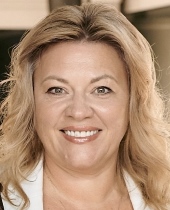
Parent, La Grande Boissière Secondary
I am Tetiana Popovych, a banker with more than 20 years of executive experience in finance, capital markets and institutional development.
I served as Head of Capital Markets at Sense Bank (formerly Alfa-Bank Ukraine), a major international bank operating in Ukraine, where I led strategic initiatives and developed new business lines. Most of the key digital and innovative capital market products introduced on the local market during that period were created either by my team or with the direct participation of my team. My work consistently combined financial oversight, investment expertise and long-term strategy with disciplined risk management and operational continuity, particularly during periods of international and regional crisis.
Beyond executive management, I have been actively involved in governance and professional associations. I have served as Co-Chair of the Banking and Financial Services Committee at the American Chamber of Commerce, been an active member of the European Business Association, a Board member of the Ukrainian Exchange, and a member of CEO Club Ukraine, where I serve as Deputy Head of the Finance and Audit Committee. I also participate in two official Government Working Groups related to European integration and have worked extensively with international financial institutions and global partners.
In addition to my financial career, I am committed to social responsibility. I serve on the Supervisory Board of “Soborna,” a charitable organisation supporting young people who have lost their parents in war.
As a parent of a Grade 9 student at Ecolint LGB, I deeply value the school’s mission and its long-standing tradition of international education.
What are your main motivations for becoming a Board member?
My motivation to serve on the Governing Board is rooted in three core pillars: professional expertise, social responsibility, and a deep commitment to education.
First, I believe my strong background in finance, corporate governance, risk management and business development can meaningfully contribute to the Board’s work. Throughout my executive career, I have focused on ensuring financial resilience, disciplined oversight and sustainable growth — all of which are particularly important for institutions operating in a complex and evolving environment.
Second, my social position and civic engagement are central to my motivation. Beyond the financial sector, I serve on the Supervisory Board of a charitable organisation supporting young people affected by war. This work reflects my belief that leadership carries responsibility — not only for financial performance, but for societal impact and ethical stewardship.
Third, I take education very seriously. For me, education is not only about academic standards but about shaping critical thinking, openness, responsibility and long-term perspective. As a parent at Ecolint LGB, I feel personally invested in the school’s stability and future development.
Bringing together professional discipline, social responsibility and respect for educational values is what motivates me to contribute to the Governing Board.
What skills/expertise would you bring to the Governing Board?
- Governance
- Fundraising
- Financial management and oversight
- Sustainability
- Use of technology and data as a mean to drive transformational change
- Architectural design and planning
In light of the Ecolint Governing Board’s interest in primarily seeking individuals with skills/expertise/experience in financial management, governance, and fundraising, please share concrete examples of how your experience would be relevant, and how this could benefit Ecolint.
Throughout my executive career, I have combined financial management, governance discipline, fundraising and business development in complex and demanding environments. Below are concrete examples of how this experience is directly relevant to Ecolint.
1. Financial management and resilience.
As Head of Capital Markets at Sense Bank, I was responsible for liquidity oversight, investment portfolios and market risk exposure, particularly during periods of international and regional crisis. My priority was always clear: to ensure full and timely fulfilment of obligations while preserving operational continuity. This required disciplined budgeting, scenario modelling, stress testing and proactive risk supervision.
For Ecolint, this experience can support long-range financial planning, cost discipline, structured risk assessment and strengthening financial resilience in an increasingly volatile environment.
2. Governance and oversight.
I have served as a Board member of the Ukrainian Exchange and as a Supervisory Board member of the charitable organisation “Soborna.” In both roles, my responsibility was independent oversight: ensuring financial transparency, assessing strategic and operational risks, strengthening accountability and aligning decisions with long-term sustainability.
Within Ecolint’s Board and committees, I would bring a structured governance approach grounded in fiduciary responsibility and best-practice oversight.
3. Fundraising, partnerships and business development.
In my executive career, I worked extensively with international financial institutions (IFIs), structuring syndicated loans and issuing Eurobonds with an aggregate volume exceeding the equivalent of CHF 1 billion. These transactions required building strong institutional partnerships, investor confidence and disciplined financial structuring.
In parallel, within “Soborna,” we are actively engaged in fundraising initiatives to support young people affected by war, which requires strategic donor engagement, credibility and transparent reporting.
Beyond fundraising, I have consistently developed new business lines and innovative financial products, strengthening institutional positioning and long-term growth. For an educational institution, business development means carefully identifying sustainable growth opportunities, strengthening partnerships, enhancing reputation and ensuring competitiveness while preserving mission and values.
In summary, my background integrates financial discipline, governance integrity, fundraising capacity and structured business development, all focused on long-term institutional stability and sustainable growth.
How would you support the mission of the Foundation if you are elected to the Governing Board? Emphasising the skills/expertise that were highlighted above, and other leadership and soft skills you would bring to the Board Governing.
If elected to the Governing Board, I would support the Foundation’s mission primarily through strong financial oversight, governance discipline and long-term strategic thinking.
Financial management and sustainability.
While operational management belongs to the executive team, the Board’s role is to ensure prudent oversight and long-term financial sustainability. I would contribute through structured review of budgets, investment policies, risk exposure and capital allocation decisions, ensuring that financial stability supports the school’s mission across economic cycles.
Governance.
With board-level experience at the Ukrainian Exchange and within non-profit supervisory structures, I understand fiduciary responsibility, transparency and accountability. I would bring analytical discipline, independence of judgment and commitment to best governance practices aligned with the Foundation’s long-term interests.
Fundraising and partnerships.
My experience structuring syndicated financing and Eurobond issuances exceeding the equivalent of CHF 1 billion, combined with active fundraising engagement in the “Soborna” charitable organisation, provides a strong foundation for supporting sustainable partnership and fundraising strategies at Board level.
Technology, data and long-term planning.
Having led digital innovation initiatives in financial markets, I value data-driven decision-making. At Board level, this translates into supporting evidence-based strategy and careful evaluation of long-term capital and infrastructure planning.
In terms of leadership, I bring calm decision-making, cross-cultural experience and the ability to engage constructively in complex discussions while focusing on collective responsibility.
My commitment would be to safeguard financial integrity, strengthen governance quality and support sustainable strategic direction in service of Ecolint’s mission.
Finally, could you describe your understanding of relationships within the Governing Board and your approach to the Governing Board culture? How do you imagine the collaboration between the Board members with other stakeholders such as staff, other parents and the local community?
My understanding is that the Governing Board is the highest authority of the Foundation, and its effectiveness depends on trust, clarity of roles and a strong culture of collective responsibility.
Within the Board, relationships should be built on mutual respect, independence of judgment and shared accountability for the long-term direction of the Foundation. The Board is not an operational body. Its role is to provide strategic oversight, ensure financial stewardship and safeguard the mission and values of the institution. A healthy Board culture encourages open discussion, diversity of perspectives and constructive challenge, while maintaining unity around the Foundation’s objectives.
In my experience serving on supervisory and advisory boards, the most effective boards are those where members prepare thoroughly, listen carefully and focus on the interests of the institution rather than individual agendas. Strategic clarity, financial responsibility and respectful dialogue are essential elements of strong governance.
With regard to other stakeholders, I see the Board as a guardian of balance and long-term sustainability. The relationship with the Director General and the leadership team should be one of strategic partnership, with clear boundaries between governance and management. The Board sets direction and oversees performance, while management executes operations.
In relation to staff, the Board should promote transparency, ensure fair and consistent policies and support an environment where academic excellence and wellbeing can thrive. With parents, trust and open communication are essential. The Board should remain attentive to their perspectives while fulfilling its fiduciary and strategic responsibilities.
As for the local and international community, the Foundation plays a unique role in Geneva. It has the opportunity to serve as a bridge between cultures, institutions and public authorities, reinforcing its commitment to international education and shared values.
Ultimately, I see Board culture as one of stewardship, preserving the Foundation’s legacy while responsibly shaping its future.